202 notes tagged as ["seo"]
Filter your results by choosing one or more tags below or type your query in the search field above.
-

I want you to try a small experiment. Take the classic SEO keyword you’re proudest of — you know, the one that you fought your way to get to page one of Google. Now, transform that keyword into a question a real customer would actually ask about that topic. Not the keyword. The messy, contextual, “here’s my situation” version of it. And put that question into the answer engines — ChatGPT, Google, Gemini, Perplexity, etc.
-
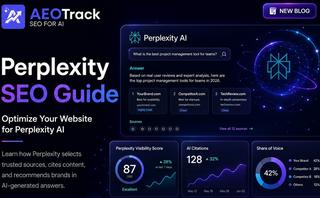
Perplexity SEO optimizes your content to be cited in Perplexity AI’s real-time, fully attributed answers. This guide covers PerplexityBot access, content freshness signals, domain authority, answer formatting, and tracking Perplexity citations.
What is Perplexity SEO?
Perplexity SEO refers to optimizations that increase the likelihood of your content being cited in Perplexity AI responses. Perplexity AI is a real-time answer engine with over 100 million monthly users — and unlike ChatGPT or Gemini, its entire value proposition is transparent citation with live web retrieval.
-
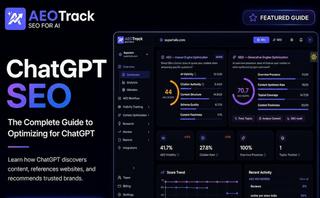
ChatGPT SEO is the set of optimizations that make your website more likely to be cited as a source in ChatGPT responses. This guide covers how ChatGPT selects sources, GPTBot access, FAQ schema, Bing indexing, content structure, and citation tracking.
What is ChatGPT SEO?
ChatGPT SEO refers to the set of optimizations that make your website more likely to be cited as a source in ChatGPT responses. Unlike traditional SEO — which targets blue-link rankings in Google — ChatGPT SEO targets your brand’s inclusion inside AI-generated text answers.
-
You are currently enjoying the free trial mode which gives only back 3 results for each of your searches.
Click on Reset Search Tags to try another search.
Free NewsletterOnly paid members can get full access to the most recent content, create their own tags & personal folders, assign search results to specific projects and much more… all of this for less than 99c a day.
-
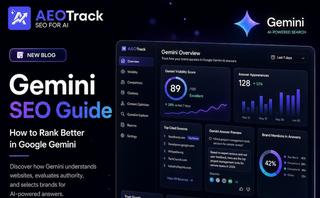
Gemini SEO: How to rank in Google Gemini and AI Overviews
Gemini SEO optimizes your website for inclusion in Google Gemini responses and Google AI Overviews. This guide covers Google-Extended bot access, structured data requirements, Core Web Vitals, EEAT signals, and how to track your Gemini visibility.
What is Gemini SEO?
Gemini SEO refers to optimizations that increase your brand’s inclusion in Google Gemini responses and Google AI Overviews — the AI-generated summaries that appear at the top of Google Search results pages.
-
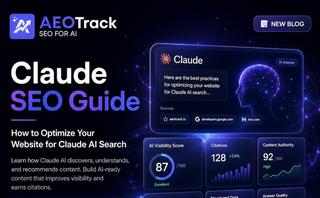
Claude SEO: How to get your brand featured in Claude AI answers
Claude SEO optimizes your content for citation in Anthropic’s Claude AI. This guide covers ClaudeBot and anthropic-ai bot access, content structure for factual accuracy, building authority signals Claude values, and tracking your Claude citation rate.
What is Claude SEO?
Claude SEO refers to optimizations that make your content more likely to be cited in Claude’s responses. Claude, developed by Anthropic, is one of the most widely used AI assistants globally — powering Anthropic’s Claude.ai, Amazon Bedrock, and countless third-party integrations.
-
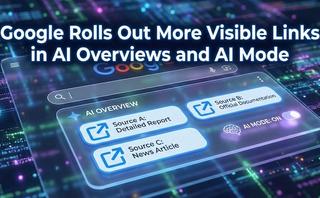
More links are coming to AI Overviews
The growth of zero-click search results may be slowing, according to new industry reports. Don’t rush into abandoning once-effective tactics; add new ones instead. Semrush-owned Datos analyzed “tens of millions” of desktop searches in the U.S. and Europe from March 2025 to March 2026, and published the results in “State of Search Q1 2026.” SparkToro’s Rand Fishkin added commentary.
Per the report, zero-click searches in the U.S. declined from 24.5% in December 2025 to 22.4% in March. Organic click-throughs increased from 42.0% to 44.9%.
-

The AEO divide: Why strategy and execution aren't matching up
AI is reshaping how people discover brands, pushing Answer Engine Optimization (AEO) from experimental tactic to executive mandate. Yet while 68% of marketing leaders report some level of AEO maturity, just 26% of practitioners say they’re actively implementing it — exposing a growing divide as organizations struggle with ownership, measurement, and defining what success actually looks like.
The AEO Divide captures insights from 400 marketers navigating this shift in real time. The report reveals how teams are approaching AEO in practice, where execution breaks down, and what separates early leaders from everyone else.
-
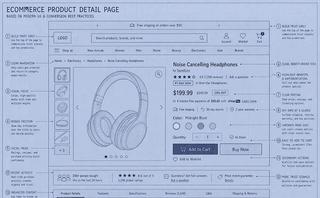
Rethink your product detail pages
Conversion is the primary job of ecommerce product pages. Ranking in search engines has always been a close second. Until now. It’s near cliché in 2026 to note that search and product discovery are changing. AI Overviews, AI Mode, various answer solutions, AI chat interfaces, and emerging shopping agents are remaking how consumers find and buy, from luxury items to everyday goods. Conversion is the primary aim of a product detail page. But it should also attract traffic via traditional rankings and generative AI visibility.
-
The future of AEO & content marketing in 2026: Key trends & top predictions
The most important AEO and content marketing trends for 2026 center around leveraging agentic AEO workflows, shifting focus from traffic to brand visibility, and building authority across both traditional search engines and emerging answer engines.
As AI search continues to shift, the brands that succeed will be those that develop an agentic AEO strategy to streamline key workflows from creating and optimizing content, monitoring AEO and technical performance, and ensuring their brand is consistently surfaced, trusted, and recommended across AI-generated answers.
-
The 2026 state of AEO / GEO
We surveyed over 250 top digital leaders—from CMOs to VPs, and Senior Directors at enterprise companies—on how they’re approaching answer engine optimization (AEO) in 2026. The verdict is nearly unanimous: 97% reported a positive impact from AEO / GEO in 2025, and 94% plan to increase their AEO / GEO investments in 2026. This report details the exact strategies, roles, and technologies they’re prioritizing, from hiring prompt engineers to adopting integrated AEO / GEO platforms. Generative AI and answer engines have redefined digital discoverability, giving users more direct pathways to find brands, compare solutions, and drive purchase decisions.
-
Schema markup: What it is and why it matters in 2026
Schema markup is code you add to a webpage to help machines understand the meaning behind your content. In traditional SEO, schema can improve how your content appears in Google’s results — think review stars, event dates, FAQ toggles, and even knowledge panels. But in 2026, it’s not just about rich results.
AI systems like Google’s AI Overviews, ChatGPT, Perplexity, and others rely heavily on structured data to understand, summarize, and cite your content accurately. That’s why schema markup matters more than ever: