779 notes tagged as ["Customer behaviour"]
Filter your results by choosing one or more tags below or type your query in the search field above.
-
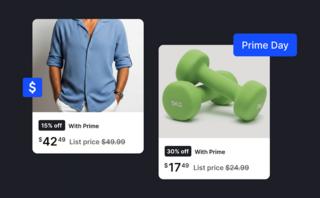
Take a look at regional differences in merchant sales and consumer behaviour during Amazon Prime Day. You might think Prime Day sales, held over July 8-11 this year, would only impact the revenue flows for Amazon. But data analysis from Checkout.com shows knock-on effects on sales for other online businesses over this same period, too. In fact, we recorded a 9% spike in revenue on the first day of Amazon Prime for merchants in certain lines of business compared with the same date the month prior. Clearly, consumers are primed to buy online during this time.
-
This report takes a close look at the online beauty industry. It shows where the most category potential lies, where beauty e-commerce is sold and how consumers shop for beauty products. Every number in this report is derived from real purchase data from card issuers and payment processors cross-validated with retailer data, traffic signals, and public market data.
What’s inside:
Provides beauty statistics on the e-commerce market including makeup online sales
-

Beauty shoppers have never been more connected, informed, or selective. As wellness, self-care, and digital commerce continue to reshape the industry, beauty brands face a new challenge: creating content that not only inspires consumers but also converts across increasingly complex shopping journeys. From AI-powered product recommendations and social commerce to evolving consumer expectations around transparency and personalization, the rules of beauty engagement are changing rapidly.
-
You are currently enjoying the free trial mode which gives only back 3 results for each of your searches.
Click on Reset Search Tags to try another search.
Free NewsletterOnly paid members can get full access to the most recent content, create their own tags & personal folders, assign search results to specific projects and much more… all of this for less than 99c a day.
-
Holiday shopping starts earlier, raising the stakes for brands
Attentive, the omnichannel marketing platform redefining how brands and people connect, released new Consumer Pulse research revealing that holiday shopping continues to kick off well before Black Friday, with some consumers starting as early as the summer months. The survey found that 83% of consumers begin planning holiday purchases before Black Friday, while 71% plan to start shopping before the holiday shopping event, up 12 percentage points from last year. As consumers spread purchases across a longer shopping season, brands have more opportunities to influence purchase decisions by engaging customers with timely, personalized experiences throughout the journey.
-
Global consumer products engagement report
Consumer products (CP) brands are operating in a high‑pressure environment: costs are up, supply chains are stretched, and loyalty seems harder than ever to sustain. Their customers want real connections with brands, they expect more in exchange for their loyalty. Brands truly are entering The Engagement Era.
We teamed up with Deloitte to survey 14,000 general respondents and 750 senior decision makers within marketing teams at enterprise-level businesses. Our extensive research showcases how both consumers and brands are adapting to shifting paradigms and embracing engagement channels beyond traditional marketing and retail media.
-

What 14,473 festive shoppers told us about global shopping habits
We surveyed thousands of festive shoppers from 18 countries to better understand how people are discovering products, weighing purchase decisions and how they move from browsing to buying. Every festive season, marketers face the same core questions: where do shoppers discover, compare and decide? How do they progress from “I need ideas” to “I’m ready to buy”?
This year, the answers are shifting. Social commerce is accelerating. AI is changing how shoppers search. Creators have become trusted shopping advisors. The habits that seemed settled a year ago look different now.
-
The growth strategies behind Europe's winning FMCG brands
Every day, millions of shopping decisions determine which brands make it into the basket. In 2025, more than half of tracked brands increased their Consumer Reach points (CRP), but growth was not random. The brands that gained ground were easy to understand, easy to find, and relevant to shoppers’ everyday lives.
Shoppers were not choosing between control and reward, they wanted both. Rather than simply spending less, many households became more selective, prioritizing the everyday products and experiences they valued most. How can your brand become easier to choose, more relevant in everyday life, and better aligned to evolving shopper needs? What drives successful health propositions, premium indulgence, alcohol-free choice, and emerging consumer trends?
-

How AI search is becoming a pipeline channel
Every CMO has a dashboard for paid. Every CMO has a dashboard for organic. Almost none have a dashboard for the third channel that is quietly reshaping how buyers find, evaluate, and choose vendors. That third channel is AI search. When a VP of Marketing asks ChatGPT “What are the best platforms for scaling SEO content?”, the answer it generates becomes the first touchpoint in a buying journey. No click. No impression in your analytics. No UTM parameter. But a recommendation that shapes every step that follows.
-
Beauty perspectives: 4 tensions defining FMCG
Beauty cannot be defined by a single trend line, but by contradictions: shoppers want to express their individuality while optimizing themselves, crave instant results and lasting skin health, experiment earlier and age with confidence, embrace accessibility while still reaching for exclusivity.
These tensions are already shaping what shoppers buy, the brands they trust, and the expectations they bring to the category.
-

From day to season: The new black friday & cyber reality (US edition)
Black Friday used to mean one day, one rush, one shot. For US students in 2026, it’s a season with months of planning, saving and anticipation. With an average planned spend of $333 per student (up on last year), student wallets are opening wider even as the cost of living bites. And 82% are saving specifically for it.
Our 2026 US report breaks down how students discover, decide and spend across the BFCM season, and how brands turn a one-day sale into year-round loyalty.
-

2030 Beauty trends report: What evolves, what endures, what leads
Featuring insights from Tropic Skincare, The Inkey List, Farmacias del Ahorro, Matsukiyo Cocokara & Co., DR’s Secret and Paula’s Choice Taiwan, this report explores how AI, biotechnology, diagnostics, and evolving consumer expectations are reshaping beauty retail through 2030. Stay ahead in the industry with expert insights and strategies. The future of beauty is being shaped by a new generation of consumers - more informed, more intentional, and more demanding than ever before.