646 notes tagged as ["Cross border"]
Filter your results by choosing one or more tags below or type your query in the search field above.
-
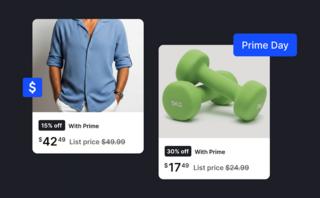
Take a look at regional differences in merchant sales and consumer behaviour during Amazon Prime Day. You might think Prime Day sales, held over July 8-11 this year, would only impact the revenue flows for Amazon. But data analysis from Checkout.com shows knock-on effects on sales for other online businesses over this same period, too. In fact, we recorded a 9% spike in revenue on the first day of Amazon Prime for merchants in certain lines of business compared with the same date the month prior. Clearly, consumers are primed to buy online during this time.
-

PYMNTS surveyed 5,841 consumers and 1,185 merchants across the U.S., Brazil and the UAE and found that AI, mobile and payment choice are reshaping the shopping journey. Nearly half of online shoppers used AI in their latest purchase, but many merchants are still moving too slowly.
Inside the index:
• AI has become part of the shopping journey. Nearly half of online shoppers used AI for their latest purchase, and ChatGPT’s share as a product research tool jumped from 2% to 30% in two years.
-
This report takes a close look at the online beauty industry. It shows where the most category potential lies, where beauty e-commerce is sold and how consumers shop for beauty products. Every number in this report is derived from real purchase data from card issuers and payment processors cross-validated with retailer data, traffic signals, and public market data.
What’s inside:
Provides beauty statistics on the e-commerce market including makeup online sales
-
You are currently enjoying the free trial mode which gives only back 3 results for each of your searches.
Click on Reset Search Tags to try another search.
Free NewsletterOnly paid members can get full access to the most recent content, create their own tags & personal folders, assign search results to specific projects and much more… all of this for less than 99c a day.
-

The state of e-commerce in Central Europe 2026
The joint report with Mastercard maps out e-commerce in Central Europe, examining revenue development, structural growth factors and agentic commerce. Every number in this report is derived from real purchase data from card issuers and payment processors cross-validated with retailer data, traffic signals, and public market data.
What’s inside:
Understand where e-commerce growth in Central Europe is heading
-
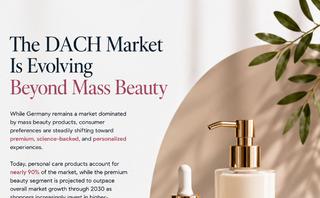
DACH beauty trends 2026: AI, personalization & consumer insights
Discover how AI, science-backed skincare, personalization, and shifting consumer expectations are transforming beauty purchasing across Germany, Austria, and Switzerland. The beauty industry in the DACH region is entering a new era. As consumers become more informed, digitally connected, and results-driven, traditional approaches to beauty marketing and product discovery are losing ground to personalized, science-backed experiences.
-

Guide for sellers in EU markets where TikTok Shop is available
TikTok Shop has been live in the Netherlands since 15 June 2026 and is rapidly gaining momentum. In addition to the Netherlands, the social commerce platform is also active in countries including the United Kingdom, the United States, Spain, Italy, Poland, Belgium and Austria. Thanks to Sell Across Europe, brands can also offer their products in other EU markets where TikTok Shop is available.
It is clear that the concept works. Since its launch in Germany in March 2025, 15 percent of all online consumers have already made a purchase through the platform. That is a significant share. Precisely because you are still an early adopter, now is the perfect time to get started and make the most of the opportunities TikTok Shop has to offer.
-
Global consumer products engagement report
Consumer products (CP) brands are operating in a high‑pressure environment: costs are up, supply chains are stretched, and loyalty seems harder than ever to sustain. Their customers want real connections with brands, they expect more in exchange for their loyalty. Brands truly are entering The Engagement Era.
We teamed up with Deloitte to survey 14,000 general respondents and 750 senior decision makers within marketing teams at enterprise-level businesses. Our extensive research showcases how both consumers and brands are adapting to shifting paradigms and embracing engagement channels beyond traditional marketing and retail media.
-

What 14,473 festive shoppers told us about global shopping habits
We surveyed thousands of festive shoppers from 18 countries to better understand how people are discovering products, weighing purchase decisions and how they move from browsing to buying. Every festive season, marketers face the same core questions: where do shoppers discover, compare and decide? How do they progress from “I need ideas” to “I’m ready to buy”?
This year, the answers are shifting. Social commerce is accelerating. AI is changing how shoppers search. Creators have become trusted shopping advisors. The habits that seemed settled a year ago look different now.
-

The growth strategies behind Europe's winning FMCG brands
Every day, millions of shopping decisions determine which brands make it into the basket. In 2025, more than half of tracked brands increased their Consumer Reach points (CRP), but growth was not random. The brands that gained ground were easy to understand, easy to find, and relevant to shoppers’ everyday lives.
Shoppers were not choosing between control and reward, they wanted both. Rather than simply spending less, many households became more selective, prioritizing the everyday products and experiences they valued most. How can your brand become easier to choose, more relevant in everyday life, and better aligned to evolving shopper needs? What drives successful health propositions, premium indulgence, alcohol-free choice, and emerging consumer trends?
-

Beauty perspectives: 4 tensions defining FMCG
Beauty cannot be defined by a single trend line, but by contradictions: shoppers want to express their individuality while optimizing themselves, crave instant results and lasting skin health, experiment earlier and age with confidence, embrace accessibility while still reaching for exclusivity.
These tensions are already shaping what shoppers buy, the brands they trust, and the expectations they bring to the category.
-

Amazon isn't the only U.S. entry channel
I speak with many international merchants looking to enter the U.S. market. Nearly all of them plan to launch on Amazon. But channels such as branded ecommerce sites and the fast-growing TikTok Shop increasingly offer alternatives.
Here’s an example. I consult with a hair-care brand that launched in the U.S. in 2021 via Instagram, then added Shopify and TikTok Shop. The brand’s average basket is $59. For two years the company gave products to small but specialized creators, purchased ads, and pushed affiliate deals. Nothing took off.