124 notes tagged as ["food for thought"]
Filter your results by choosing one or more tags below or type your query in the search field above.
-

Small retailers running on Shopify can now put their shelves in front of DoorDash’s delivery audience without touching a spreadsheet. In a move announced this month, DoorDash has become a native sales channel inside Shopify’s App Store, letting any U.S. merchant with a physical store push its catalog to the delivery marketplace and its roughly 42 million monthly active users.
How the new channel works
-
No other digital channel looks like this. Paid search has Google. Social advertising has Meta, TikTok, and a handful of others. But retail media has dozens to hundreds of networks globally, each with its own data, metrics, reporting, and ways of working. That structural fragmentation is not a phase the industry is passing through. It is the nature of the channel itself, because every retailer is, by definition, its own walled garden.
-

Retailers and brands are quickly launching shopping apps within ChatGPT and Claude. But whether or not shoppers will embrace them at a rapid pace remains to be seen. In October, OpenAI launched ChatGPT apps, where users can connect apps like Expedia, Spotify or Zillow. Once adding the apps, customers can ask the chatbot questions about planning a trip or crafting a playlist, for example. They’ll then get information about such products and services from those brands. This month, Claude introduced its version of apps called “connectors” for consumer use, after previously supporting work-related apps such as Microsoft Teams, Outlook and OneDrive. It now can tap into Uber, TripAdvisor and Instacart, among others.
-
You are currently enjoying the free trial mode which gives only back 3 results for each of your searches.
Click on Reset Search Tags to try another search.
Free NewsletterOnly paid members can get full access to the most recent content, create their own tags & personal folders, assign search results to specific projects and much more… all of this for less than 99c a day.
-
Unlock your e-commerce future: Strategic migration to enterprise Shopify
For years, enterprise brands built their digital commerce like impenetrable fortresses – custom, complex, and costly. These legacy e-commerce platform replacement systems, while once essential for stability, have become an existential liability – hindering agility, innovation, and your ability to meet modern consumer demands.
If crucial features take weeks to deploy, innovation is stalled by “upgrade fatigue” and you’re experiencing the symptoms of outdated infrastructure – this guide is for you, offering the definitive e-commerce migration strategy to transform your digital commerce operations and unleash unprecedented growth on Shopify.
-

Retail’s next era is already here
The most important moment in retail no longer happens in a store aisle or even on a single promotional day. It happens across screens, in notifications, in checkout flows, and in the quiet spaces between purchases. As e-commerce and digital-first journeys become the default, the traditional retail calendar has begun to lose its grip.
There was a time when retail operated on a clock. Seasons changed, sales launched, shoppers surged, and then everything went quiet. That predictable rhythm used to define the customer journey. However, in a world where consumers browse, compare and purchase at any hour, from any device, the old tempo no longer reflects how people actually shop.
-
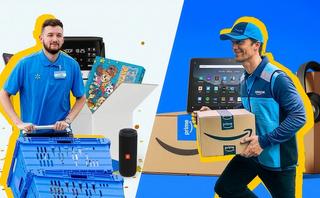
How Amazon wins discretionary spend and Walmart holds necessities
The battle for consumer spending continues. Over the past few years, shoppers have been tightening their belts, spending less on retail shopping and more on essentials like rent and healthcare. That shift spells sobering news for retail giants Amazon and Walmart. With the overall retail pie getting smaller, the scrum for each slice is heating up.
Nothing shows this battle more clearly than the holiday season. The last three months of 2025 accounted for about 27% of all retail sales for the year. Amazon, for its part, continued to gain share from October through December, achieving record-breaking results. But the boost isn’t coming from essentials. Instead, categories like clothing and electronics are fueling its gains.
-
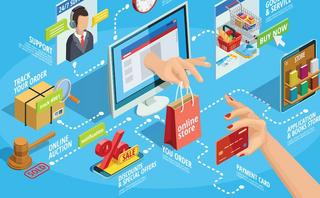
The AI platform shift and the opportunity ahead for retail
At NRF'26, Google introduced UCP for agentic commerce while Walmart unveiled agent-led shopping in Gemini. Discover what Sundar Pichai (Google, CEO) and John Furner (Walmart, President & CEO) say about what it changes for discovery, loyalty, and conversion.
Retail has lived through plenty of “next eras.” The web. Mobile. Marketplaces. Social commerce.
Each wave promised a new kind of growth, and each quietly reset customer expectations.
-

How AI reads your brand and why meaning matters most
AI systems don’t rank logos — they surface meaning. Clear, consistent signals of trust determine whether your brand appears in AI-driven recommendations. Will your brand be visible in the age of AI? The short answer: you need a meaningful brand or you’ll be commoditized.
The longer answer starts with what a meaningful brand is outside of AI. A logo is not a brand — it’s a visual identifier that recalls promises kept, problems solved and values demonstrated. Brands exist in the minds of the public.
-

Why the old rules of peak-season retailing no longer apply
If you’re a retailer just gearing up for the peak holiday shopping season, you’re probably already too late. In fact, the very notion of a big selling period that’s treated as a once-a-year phenomenon is out of date, says Greg Dyer, chief commercial officer of the staffing agency Randstad USA.
“Companies need to always be thinking about peak — constantly involving all areas within the organization,” he says. That means tightly coordinating planning across manufacturing, logistics, marketing and sales on an ongoing basis.
-
How labeling errors create big problems in global supply chains
We expect modern supply chain environments to be hyper-efficient, and a single bad barcode can set off a domino effect of disruptions like delayed shipments, failed compliance checks, internal rework, and even lost customer trust. While automation and data capture technologies continue to advance, one seemingly simple element often causes disproportionate problems: the printed barcode label.
-

2025 State of B2B ecommerce report
We conducted our 3rd annual survey of B2B eCommerce practitioners to understand how the market has changed over the past year. In this in-depth report, we uncover key trends in the changing culture of B2B companies, where companies are investing… and much more.)