942 notes tagged as ["marketing"]
Filter your results by choosing one or more tags below or type your query in the search field above.
-
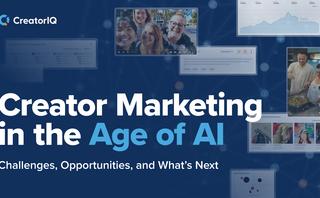
The brands defining creator marketing in 2026 are building something new: programs designed for an internet where AI synthesizes answers, earned content compounds, and human creators carry more strategic weight than ever.
Drawing on original CreatorIQ research and 250M+ social posts, Creator Marketing in the Age of AI maps the choices leading brands are making across discovery, creator strategy, human authenticity, and infrastructure — and what it takes to build a program ready for what’s next.
-
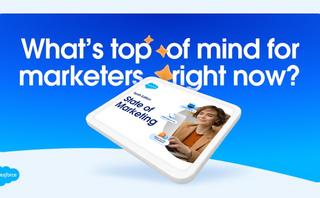
We surveyed 4,500 marketing leaders worldwide, and the consensus is clear: the era of one-way conversations is over. Today’s customers don’t want to be talked at — they want a dialogue. While 83% of marketers recognize the shift toward personalized, two-way messaging, only one in four are satisfied with how they use data to power those moments. The teams closing that gap are using agentic AI to deliver personalized engagement at a scale that once felt out of reach.
-
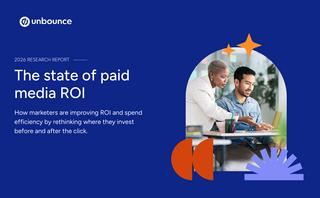
See what 300+ paid media marketers and agencies reveal about what’s driving ROI, where budgets are going, and why the biggest opportunities are after the click. Landing pages were the strongest predictor of paid media ROI measured. Marketers most confident in their landing pages are 4.5x more likely to exceed their ROI targets than those who are less confident.
Learn where paid media teams are investing, what’s holding ROI back, and why marketers are focused on stronger post-click experiences.
-
You are currently enjoying the free trial mode which gives only back 3 results for each of your searches.
Click on Reset Search Tags to try another search.
Free NewsletterOnly paid members can get full access to the most recent content, create their own tags & personal folders, assign search results to specific projects and much more… all of this for less than 99c a day.
-

Personalization playbook second edition
The Personalization Playbook is your go-to guide for proven, high-impact omnichannel marketing tactics that drive engagement, conversions, and customer loyalty. Packed with challenge-led use cases and detailed, AI-infused automation workflows, this Playbook helps you take the guesswork out of execution and build high-performing campaigns.
What’s inside:
Tackle your use cases head-on! This Playbook gives you step-by-step guidance for orchestrating data-driven campaigns and applying AI to hyper-personalize each touchpoint along the customer journey.
-
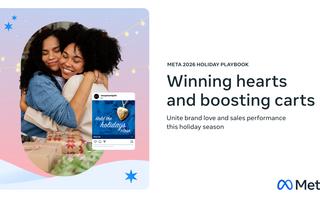
Inside Meta’s 2026 holiday guide
Meta has recently released its 34-page 2026 holiday marketing guide titled “Winning Hearts and Boosting Carts”. and it makes one core argument: brands that wait until November to plan their holiday push are already behind. The guide lays out where holiday shoppers spend their time, why creators have become central to driving purchase decisions, and a quarter-by-quarter timeline for building campaigns months ahead of peak season.
-

What 14,473 festive shoppers told us about global shopping habits
We surveyed thousands of festive shoppers from 18 countries to better understand how people are discovering products, weighing purchase decisions and how they move from browsing to buying. Every festive season, marketers face the same core questions: where do shoppers discover, compare and decide? How do they progress from “I need ideas” to “I’m ready to buy”?
This year, the answers are shifting. Social commerce is accelerating. AI is changing how shoppers search. Creators have become trusted shopping advisors. The habits that seemed settled a year ago look different now.
-
The 2026 holiday strategy playbook
Summer is the best time to kick off holiday planning. To help you put your best foot forward, we asked consumers in early January to break down how much they actually spent during the 2025 holiday season —while it was still fresh. We covered top spending categories, timing, how they used AI, the in-store versus online breakdown and the impact of cost increases on shopping decisions. With this inside look, your holiday marketing strategy will be even more precise.
-
Word of mouth, word of machine
As AI increasingly influences how consumers discover, evaluate and choose brands, the rules of marketing are being rewritten. Word of Mouth, Word of Machine explores what this shift means for brand builders and argues that success in the AI era requires more than visibility alone. Brands must be both machine-readable and human-referenceable.
The report introduces five principles for future-fit growth: brand clarity, machine readability, creative consistency, human referenceability and authority. Together, they provide a practical framework for ensuring brands are understood by AI systems while remaining meaningful to people.
-

Holiday planning needs a new playbook
Why the brands that win this holiday season won’t be the ones with the biggest budgets. They’ll be the ones that adapt the fastest. Success was measured by how accurately brands forecast demand, how early they secured media and how effectively they executed against a calendar built around predictable shopping moments. If your holiday strategy was finalized before the leaves changed color, you were ahead of the competition.
-
2026 influencer marketing report: The next wave of influence
The influencer marketing landscape is changing, with both its importance and its scope expanding. As influencer marketing investments rise, what was once an experimental tactic has become a sophisticated, highly funded go-to-market framework. But marketing teams face growing pressure from leadership to demonstrate measurable ROI. Millions of dollars are wasted on partnerships that look strong on paper but fail to convert, driven by a misalignment between brands and creators and an over-reliance on traditional, follower-first sourcing playbooks.
-
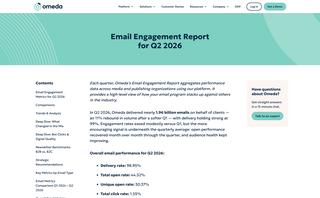
Email engagement report for Q2 2026
Curious about how your team’s email marketing efforts compare to others in the media industry? Each quarter, Omeda releases aggregated, anonymized data from client emails sent from our platform so you can understand how your emails are performing. In Q2 2026, Omeda delivered over 1.96 billion emails on behalf of clients from our platform.
Covered in this report:
Email benchmarks for media industry emails sent in Q2 2026