182 notes tagged as ["conversion"]
Filter your results by choosing one or more tags below or type your query in the search field above.
-
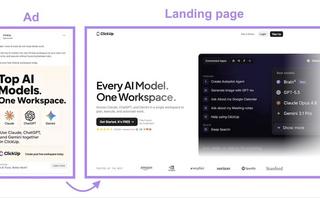
A landing page is a webpage designed to drive one action, like a sign-up, download, or purchase. Landing pages are commonly linked to from paid ads, email promotions, and other campaigns. When your landing page reflects what your campaign promised, visitors feel confident they’re in the right place — which is why landing pages tend to have strong conversion rates. Plus, ads on platforms like Google, Facebook, and Microsoft often have better placements and a lower cost per click ( CPC) when the landing page is relevant to the ad.
-

Discover how AI, science-backed skincare, personalization, and shifting consumer expectations are transforming beauty purchasing across Germany, Austria, and Switzerland. The beauty industry in the DACH region is entering a new era. As consumers become more informed, digitally connected, and results-driven, traditional approaches to beauty marketing and product discovery are losing ground to personalized, science-backed experiences.
-

Because the digital marketplace is so competitive, success in ecommerce often hinges on subtle factors that can significantly impact customer experience. How subtle? How about the difference that a single second can make. For buyers from across the spectrum, ecommerce site speed is more than just a “nice-to-have” convenience—in fact, conversion rates, abandoned carts, and customer lifetime value are all directly impacted by how fast the shopping experience is.In this blog, we’ll help explore why optimizing your site’s page loading speed should be a top priority, and is a critical factor in ecommerce success.
-
You are currently enjoying the free trial mode which gives only back 3 results for each of your searches.
Click on Reset Search Tags to try another search.
Free NewsletterOnly paid members can get full access to the most recent content, create their own tags & personal folders, assign search results to specific projects and much more… all of this for less than 99c a day.
-
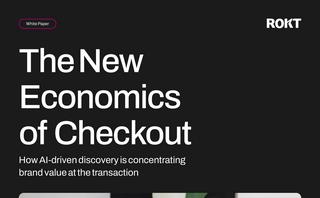
The new economics of checkout
AI is reshaping how consumers discover products. Search, product pages, and category browsing are increasingly compressed or bypassed entirely. The transaction still happens on the brand’s site, but the pages customers land on are now responsible for far more of the journey than they were designed to handle. Even as AI platforms pull back from owning checkout directly, the discovery shift driving customers to these pages is only accelerating.
-
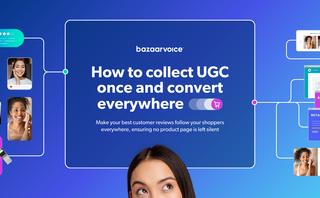
How to collect UGC once and convert everywhere
Eliminate “silent pages” by syndicating authentic reviews and photos across a global network of retail partners. This guide reveals how to transform static reviews into liquid assets that follow your shoppers everywhere. Learn to leverage the Bazaarvoice Retailer Network to automate syndication, ensuring your best customer voices are live on every product detail page the moment they are needed.
-
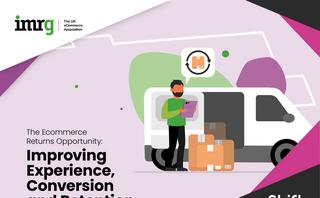
The ecommerce returns opportunity
We are excited to announce that our ‘The Ecommerce Returns Opportunity: Improving Experience, Conversion and Retention’ report in collaboration with industry expert nShift is available now! Returns have become a key driver of customer satisfaction, conversion and loyalty, making an effective returns strategy more important than ever.
Discover the latest insights from 1,000 UK consumers to understand changing expectations, identify opportunities to optimise your returns process, and learn how leading retailers are turning returns into a competitive advantage.
-

eCommerce conversion optimization guide
eCommerce conversion optimization is the practice of improving the share of shoppers who complete a purchase, using both on-site levers and engagement-driven ones. Conversion isn’t only an on-site problem. A lot also happens after the click, through cart recovery, personalization, and cross-channel messaging that bring shoppers back to buy.
In this guide, you’ll get a clear definition and a formula to work with. You’ll also find out realistic benchmarks, the on-site and engagement levers that move the conversion rate, and how to prioritize them.
-
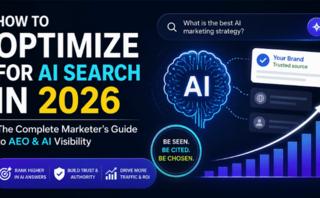
Website marketing: A guide for the AI search era
For years, website marketing meant search visibility: ranking for the right queries and earning the click. The way people search has changed. They still use Google, but they also ask AI tools for direct answers. These tools draw on training data and the sources they retrieve to decide which brands are credible enough to surface or cite.
That shifts the goal from visibility to credibility: proof that your brand is trustworthy enough to be recommended. The techniques are largely the same. What they’re accomplishing is different.
-

Where AI belongs in e-commerce (and where it doesn’t)
The early data on artificial intelligence shopping is in and it has a story to tell. Shopify reported that shoppers who arrive at e-commerce sites through AI platforms like ChatGPT, Perplexity, and Gemini are 50 percent more likely to convert to purchase than those coming from organic search. Not only are they more likely to make a purchase but when they do, they spend 14 percent more per order. More than half of these AI-referred sessions land directly on a product page, ready to buy.
-
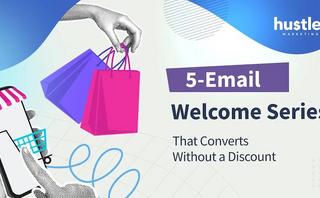
Most brands use discounts as a substitute for messaging
Most ecommerce welcome flows underperform for one reason: they rely on a discount to do all the work. A percentage-off offer might get the first purchase, but it does very little to build trust, educate the customer, or increase long-term value. The highest-performing welcome flows don’t remove discounts entirely — they build enough conviction before the conversion ask happens.
Key Takeaways
Discounts don’t fix weak welcome flow strategy
-
8 Challenges faced by online businesses in Central and Eastern Europe
Running a business online comes with numerous challenges due to the fast-moving environment , where customer expectations are higher, competition is just a click away, and technology keeps evolving. Still, moving online is clearly worth it.
In Central and Eastern Europe (CEE), 73% of people shop online, so if your business isn’t there, you’re missing a large share of customers. The European e-commerce market itself is huge, too, expected to reach €353.5 billion in 2026 and keep growing.